Laszlo Hanyecz
About Laszlo Hanyecz
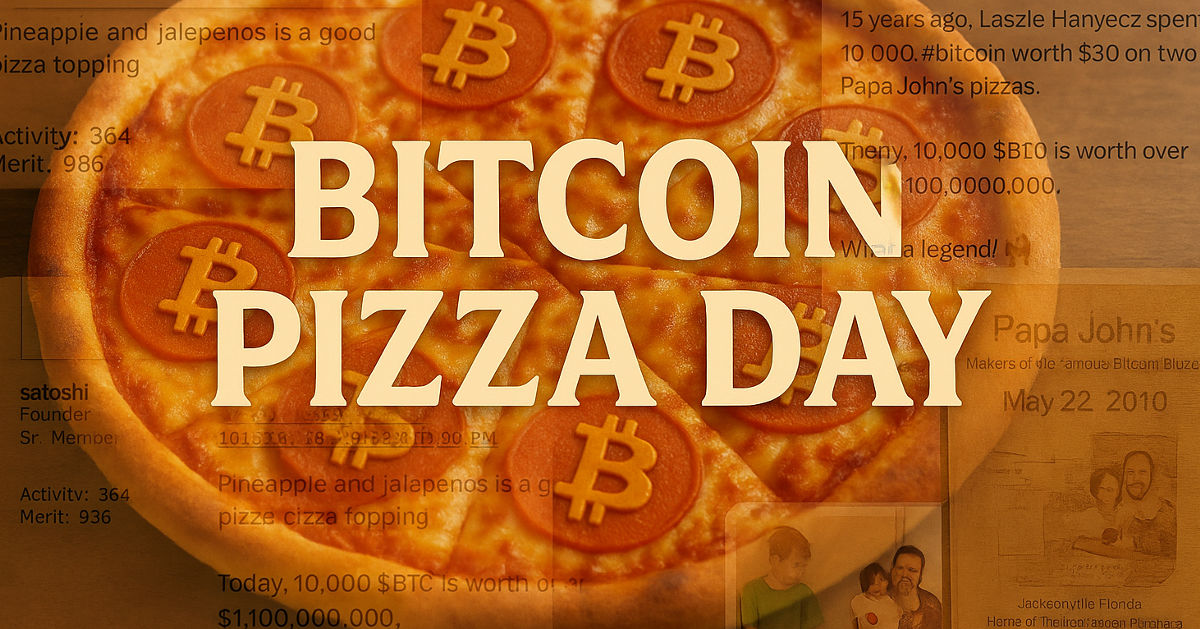
Laszlo Hanyecz is the man who proved Bitcoin could buy things. On May 22, 2010, a Florida programmer with a forum username in lowercase paid ten thousand bitcoins for two large pizzas, and in doing so turned a piece of internet money into something the world could use. The transaction is now the most-discussed retail purchase in the history of the asset, an annual celebration in every Bitcoin community, and the cleanest illustration of why a digital currency only becomes real when somebody actually spends it.
Origins
Hanyecz was working as a software developer when he encountered Bitcoin in early 2010, a few months after Satoshi Nakamoto released the network. He was an active member of the bitcointalk.org forum, where the network's first hundred users debated everything from block propagation to whether the project should have a logo. Hanyecz contributed code; he reported bugs in the early reference client; he ported Bitcoin to macOS so it could be run on something other than Windows. Long before the pizza, he was already one of the very few people in the world for whom Bitcoin was a daily working tool.
The pizzas
On May 18, 2010, Hanyecz posted to bitcointalk offering 10,000 BTC to anyone who would arrange the delivery of two large pizzas to his home. The post is part of the canon. He specified that he liked onions, peppers, mushrooms, sausage. He noted he was happy to pay someone to call the pizza place and place the order on his behalf — he wasn't asking for pizza to be cooked, just delivered. Four days later, a then-19-year-old Bitcoin user named Jeremy Sturdivant — operating under the handle "jercos" — took the offer, called a Papa John's, and arranged the delivery. The pizzas arrived; Sturdivant received the BTC. The transaction settled. Bitcoin had bought a real-world good for the first time on record.
At the prevailing exchange rate that day, 10,000 BTC was worth roughly forty-one dollars. At every subsequent valuation, the price has only made the story more remarkable. By 2026, those same coins would be worth a sum measured in hundreds of millions of dollars at minimum. Hanyecz has consistently said over the years that he does not regret the transaction. The point, in his telling, was not the price. The point was that it worked.
GPU mining and the early code
Around the same period, Hanyecz wrote and released the first widely-used GPU mining code for Bitcoin. CPU mining had been the only option since the network's launch in January 2009; Hanyecz demonstrated that the graphics-card parallelism driving video games could be brought to bear on hash computation. The change was a watershed. It set off the arms race that produced first FPGA miners, then ASICs, and ultimately the industrial mining sector. Satoshi Nakamoto, in private correspondence at the time, expressed concern that GPU mining would centralize the network too quickly; Hanyecz, characteristically, kept his head down and continued shipping code.
A quiet figure who shaped a loud movement
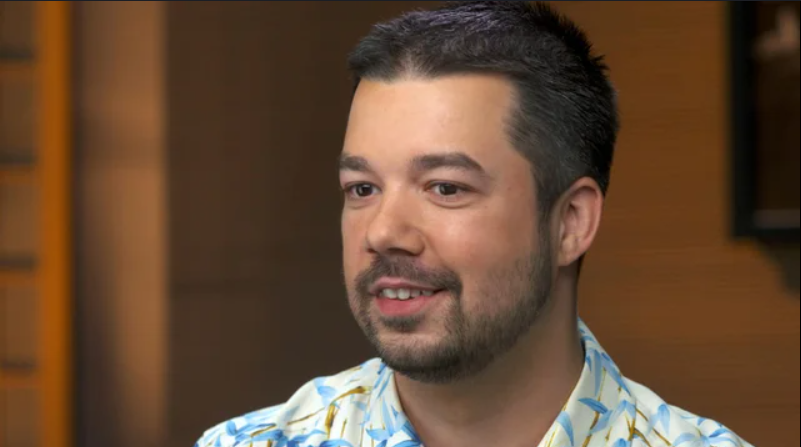
In an industry that produces extroverted public figures by the dozen, Hanyecz has remained almost entirely out of public view. He has given a small handful of interviews over the years, the most-cited to 60 Minutes in 2019, and has occasionally appeared at Bitcoin conferences. He is not on Twitter in any meaningful way. He does not run a fund. He has never tried to commercialize his place in the story. The reticence is itself part of his legend — at a moment in crypto culture when every early adopter is performing some version of themselves on a podcast, Hanyecz is back in Jacksonville, writing software.
In May 2018, on the eighth anniversary of the original transaction, he ordered another two pizzas — this time paid for over the Lightning Network, a layer-two payment system that had just gone live on Bitcoin mainnet. The order, settled in milliseconds for cents in fees, made the same point eight years later in a different technical register. Bitcoin could buy pizza in 2010; it could still buy pizza in 2018; and the second time, it could do so cheaply enough to be plausible at supermarket scale.
The Pizza Day tradition
May 22 is now Bitcoin Pizza Day, observed by exchanges, restaurants, podcasts, and meetups around the world. Papa John's outlets have used the day as a promotional hook. So have rival chains. Companies hold internal pizza parties; conference organizers schedule keynote talks; long-time Bitcoiners post the same screenshot of Hanyecz's original forum thread and the same calculation of what those coins would now be worth. It is the closest thing the industry has to a folk holiday, and it exists entirely because one engineer in 2010 decided to test whether the money he was helping to build could actually buy something he wanted to eat.
Where he stands in 2026
In 2026, Hanyecz lives the same low-key life he has lived for fifteen years. He works on software. He answers occasional press requests on or around May 22 and then disappears for the rest of the year. The industry he helped catalyze is now valued in the trillions, traded on regulated exchanges, held in ETFs by retirement funds, and used for payments by enterprise treasuries. None of that would have happened on the same timeline without the proof he offered on a Saturday afternoon in 2010, when a network of strangers on a message board figured out, together, that the digital money they had been mining could be exchanged for food. Every payment Bitcoin has settled since — every coffee, every remittance, every cross-border transaction — traces its lineage to that first one. He bought the pizzas, and in doing so, he bought everyone else the next fifteen years.