
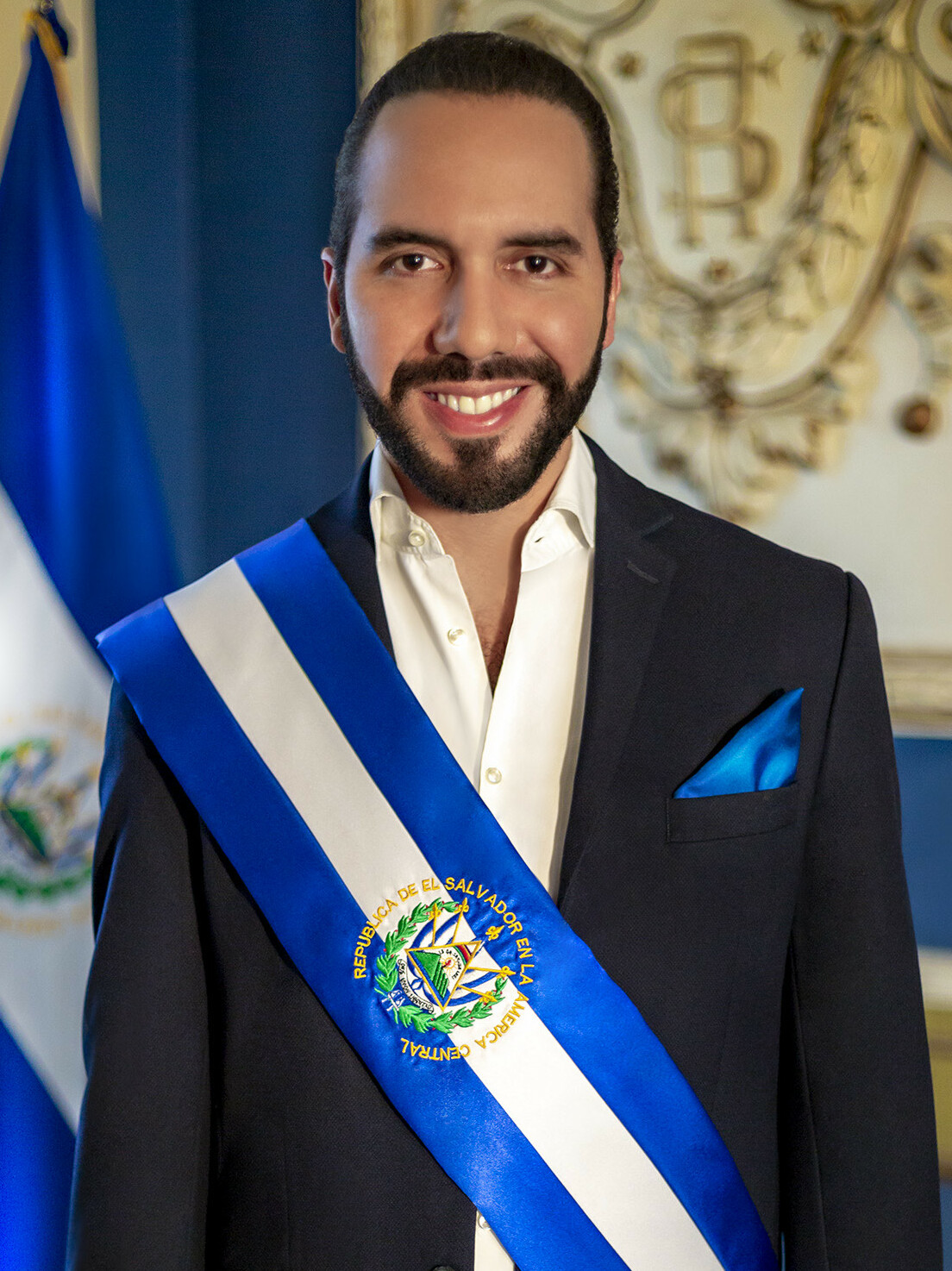
Nayib Bukele
President of El Salvador since 2019
About Nayib Bukele
Nayib Armando Bukele Ortez is a Salvadoran politician and businessman who has served as the 43rd president of El Salvador since 2019.
Nayib Bukele is the only sitting head of state who has made Bitcoin legal tender, and the only one who has accumulated a sovereign treasury position in the asset class. His decision to push the Bitcoin Law through El Salvador's legislature in September 2021 was, depending on the speaker, either a brilliant repositioning of a struggling Central American economy or a reckless monetary experiment imposed on a country that had no say. By 2026, the experiment has not delivered the disaster critics predicted, nor the prosperity boosters promised — but it has made El Salvador, and Bukele personally, central characters in the Bitcoin story.
Origins
Bukele was born in San Salvador in 1981 to a Palestinian-Salvadoran family. He worked in his family's business before entering politics in his early thirties, serving as mayor of Nuevo Cuscatlán and then of San Salvador. In 2019 he won the presidency at age thirty-seven on a platform of crime reduction and economic modernization, breaking the country's decades-long two-party hold. His subsequent crackdown on gang violence and unconventional public-policy choices have made him one of the more polarizing figures in regional politics.
The Bitcoin Law
In June 2021, Bukele announced at the Bitcoin Conference in Miami that El Salvador would make Bitcoin legal tender. The legislation passed within days. The Chivo wallet, a state-issued mobile wallet, was launched in September with a thirty-dollar incentive to download. The government began purchasing Bitcoin for the national treasury and now holds several thousand BTC. The country also issued the "Volcano Bond," a Bitcoin-collateralized sovereign-debt instrument.
The rollout was bumpy. Chivo had technical problems. Adoption among Salvadorans was lower than promised. The IMF criticized the program publicly. But the strategic positioning was real: El Salvador attracted Bitcoin-native businesses, conferences, and tourism it would not otherwise have received, and the country's sovereign Bitcoin holdings appreciated significantly through the 2024 bull cycle.
The authoritarianism question
Bukele's domestic record outside Bitcoin is contested. His crackdown on gang violence has been credited with dramatic reductions in homicide rates and criticized for mass arrests, due-process concerns, and emergency-power extensions. He has been re-elected with overwhelming majorities. International press accounts have ranged from admiring to alarmed. The Bitcoin community, broadly, has separated his economic positioning from his domestic governance — a separation his critics find untenable and his supporters find pragmatic.
Where he stands in 2026
In 2026, Bukele is in his second presidential term, El Salvador's sovereign Bitcoin position has performed well in dollar terms, and the country's Bitcoin Beach experiments continue. The Bitcoin Law has not turned El Salvador into Singapore, but it has reshaped global discussion of whether nation-states can hold digital assets. Other countries — most prominently in Central America, the Caribbean, and parts of the Gulf — have studied his playbook. The unresolved question around Bukele is what happens to El Salvador's economic experiment after his eventual departure from office, and whether the sovereign treasury position is durable across political transitions. What is not in question is that he made Bitcoin a topic that finance ministers, not just venture capitalists, now have to think about.
Related coverage
CryptolutNo coverage yet.