
Crypto vs Banks: Why Your €1000 Is a Nightmare for ING, Rabobank and ABN Amro
While Dutch banks pay billions in fines for money laundering, ordinary citizens trying to withdraw their own money for crypto are treated like criminals. A former fraud employee reveals: "That €1000? We’re not going to talk about it."
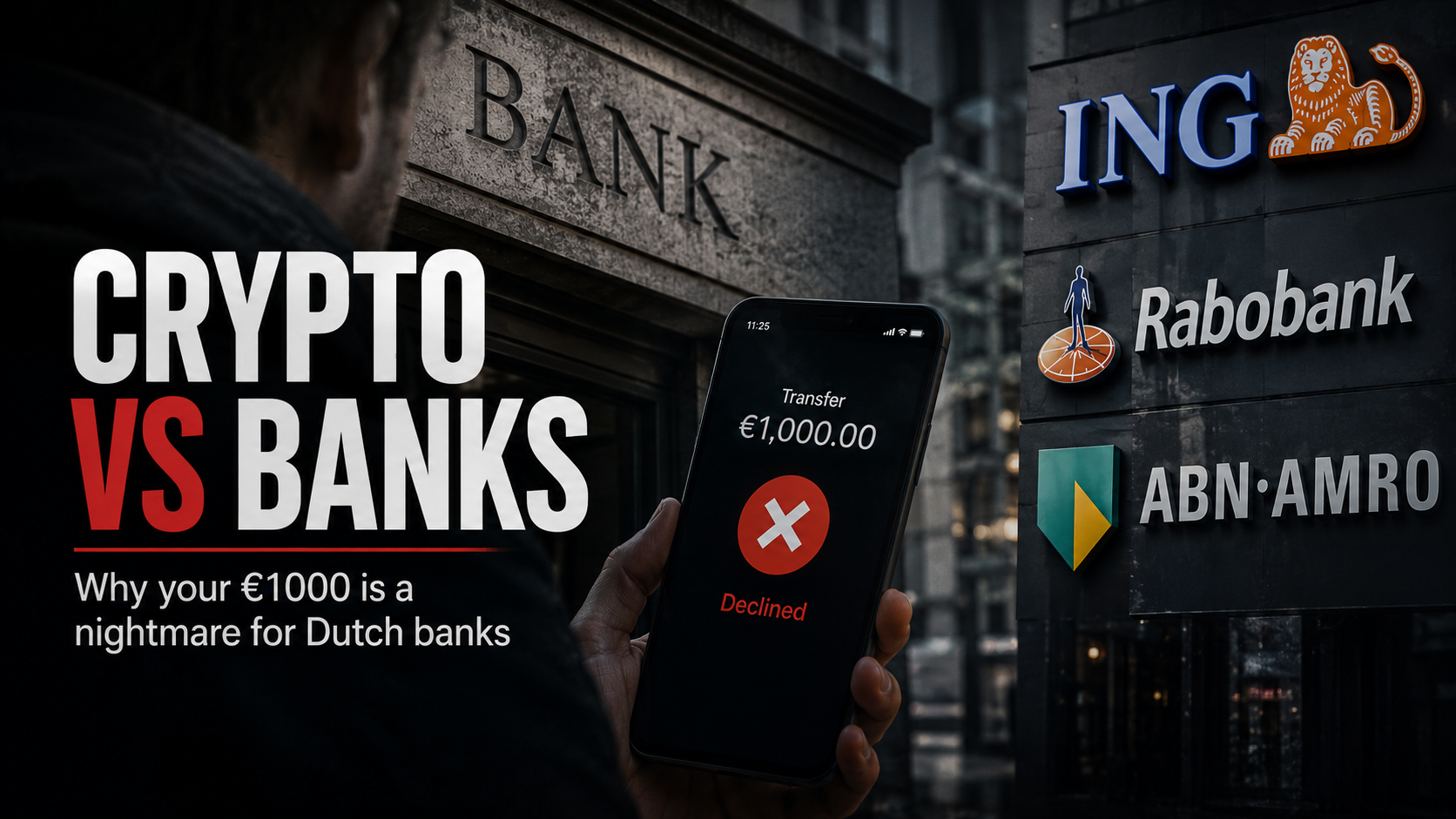
Imagine this: you want to transfer €1000 from your own savings account to a crypto exchange. A small amount for the bank? Nothing could be further from the truth.
According to internal revelations and testimonies from former employees, major banks like ING, Rabobank and ABN Amro are doing everything they can to prevent customers from moving money to crypto – while the same banks are repeatedly caught facilitating billions in money laundering.
The Double Standard: Tough on Customers, Soft on Criminals
The picture is shocking. On one hand, ordinary citizens have been intimidated, blocked and prevented from transferring money to crypto platforms for years. On the other hand, these very same banks have received massive fines for allowing criminal money to flow for years.
The numbers don't lie:
ING – €775 million ($900 million) fine in 2018
ABN Amro – €480 million fine in 2021
Rabobank – Facing criminal prosecution (2025)
ING received a fine of €775 million because the bank had "structurally and for years" failed to monitor customers and report suspicious transactions. ABN Amro followed with a settlement of €480 million.
And Rabobank? They are now facing criminal prosecution for large-scale money laundering violations. The Dutch Public Prosecution Service states that the bank "failed for years to investigate unusual transactions." A settlement failed because the parties could not agree on a deal.
"Non-compliance with the law can have major social and economic consequences. Money laundering and terrorist financing pose a threat to the integrity of the financial system and the safety of Dutch society."
— Dutch Public Prosecution Service
But where is that same tough language when it comes to ordinary citizens who want to manage their own crypto?
"That €1000? We're Not Going to Talk About It"
A former employee of the fraud department at one of the major banks, who wishes to remain anonymous for fear of losing his job, reveals:
"People think banks only check large amounts. Wrong. In our department, literally every single transfer to a crypto exchange was flagged, whether it was €100 or €100,000. Why? Because the money is leaking out of the bank. Imagine if tens of thousands of customers each take out €1000. That is tens of millions disappearing from the savings and investment products that the bank profits from."
That math adds up. The Netherlands has millions of bank customers. If just 1% of them transfer €1000 to crypto, €300 million disappears from the system.
Fraud Department: "Shouting and Intimidation Is the Standard"
Even more shocking are the stories about the work culture within the fraud departments. Another former employee, who worked at a major bank until early 2024:
"I worked with a team of about twenty people. The way of working was incredibly aggressive. Customers were literally bitten off over the phone. 'You are not getting permission. Period. You can forget about your money.' Shouting, threatening with account blocks, even telling people they would get the police after them. This was standard procedure."
According to the same source, employees were evaluated based on the number of transactions they blocked, not on legitimate suspicious activity reports:
"We had weekly targets. The more blocks, the better. Whether a transaction was genuinely suspicious? That was secondary. It was about the numbers. And if you blocked too few, you got a warning."
Tens of Thousands of False Reports
Research shows that the number of "false positive" reports (transactions incorrectly flagged as suspicious) at Dutch banks is shockingly high. Rabobank acknowledges this problem and is working with external partners to "reduce the number of incorrect alerts."
But for the affected customer, that makes little difference. Their money remains stuck, their crypto purchase does not go through, and their bank does not trust them – while that same bank allowed billions in criminal money to flow through for years.
The Numbers: Money Laundering in the Netherlands
According to the Dutch Banking Association (NVB), an estimated €16 billion is laundered annually in the Netherlands. This money comes from drug trafficking, human trafficking, child pornography and extortion.
And the banks? They turned a blind eye for years. Only after regulators stepped in harshly did any measures finally come.
Former Employee: "The Bank Knew Exactly What Was Happening"
A third former employee, who worked at various major banks for over ten years, is even more emphatic:
"Everyone inside the bank knew what was going on. We had lists of suspicious accounts, but nothing happened. Why? Because those accounts were still generating revenue. Transaction fees, payment packages, loans – it was all turnover. Only when the fines came was there suddenly a panicked response. And then they started harassing all the ordinary customers, just so they could show externally that they were 'strict.'"
What Does This Mean for Crypto Investors?
The pattern is clear: banks are not strict because they want to prevent money laundering. They are strict because they want to hold onto your money.
Crypto represents a direct threat to their business model. Every euro that leaves a traditional savings account for a crypto wallet is a euro that the bank cannot lend out, cannot collect fees on, and cannot invest for its own profit.
The fraud departments are not protecting you. They are protecting the bank's bottom line. And in the process, ordinary Dutch citizens are being intimidated, shouted at and treated like criminals – while the banks themselves walk away with multi-million euro fines as the cost of doing business.
Anonymous Testimonies
Former Fraud Employee #1 – ING
"I worked at the ING fraud department for three years. The pressure was insane. We were told to block first and ask questions later. I once had to block a grandmother who wanted to send €500 to her grandson's crypto account. She was crying on the phone. My manager stood behind me and said: 'Block her. Don't give in.' I quit a month later."
Former Fraud Employee #2 – Rabobank
"At Rabobank, we had a nickname for the fraud team: 'The Bulldog Department.' Because all we did was bite. Shouting, threatening, hanging up on people. The team leader would scream at us if we didn't block enough transactions. He said: 'These crypto people are trying to steal from the bank. Treat them like thieves.' Looking back, it was disgusting."
Former ABN Amro Compliance Officer
"The most ironic thing? We had weekly meetings about our money laundering fines. We would literally sit in a room and discuss how to avoid the next fine. Not how to stop money laundering. How to avoid getting caught. Meanwhile, on the other side of the office, the fraud team was blocking a plumber from sending €2000 to a crypto exchange. The system is completely backwards."
Disclaimer: The anonymous testimonies in this article have been provided by individuals who wish to remain unnamed due to confidentiality agreements and fear of professional retaliation. Their identities are known to the editorial team.
Related stories
Man Loses €1.5 Million Following ChatGPT Investment Advice: Are We Trusting AI Too Much?
A European investor emptied his savings into a high-risk crypto portfolio suggested by ChatGPT — only to watch it vanish in six weeks. The case sparks a urgent debate: are we outsourcing critical thinking to machines that don’t actually understand money?

Japan’s ruling party advances proposal to build national AI-blockchain financial system
Japan's ruling Liberal Democratic Party has formally approved a policy proposal to develop a national financial system leveraging blockchain and artificial intelligence, signaling a significant push for digital modernization.
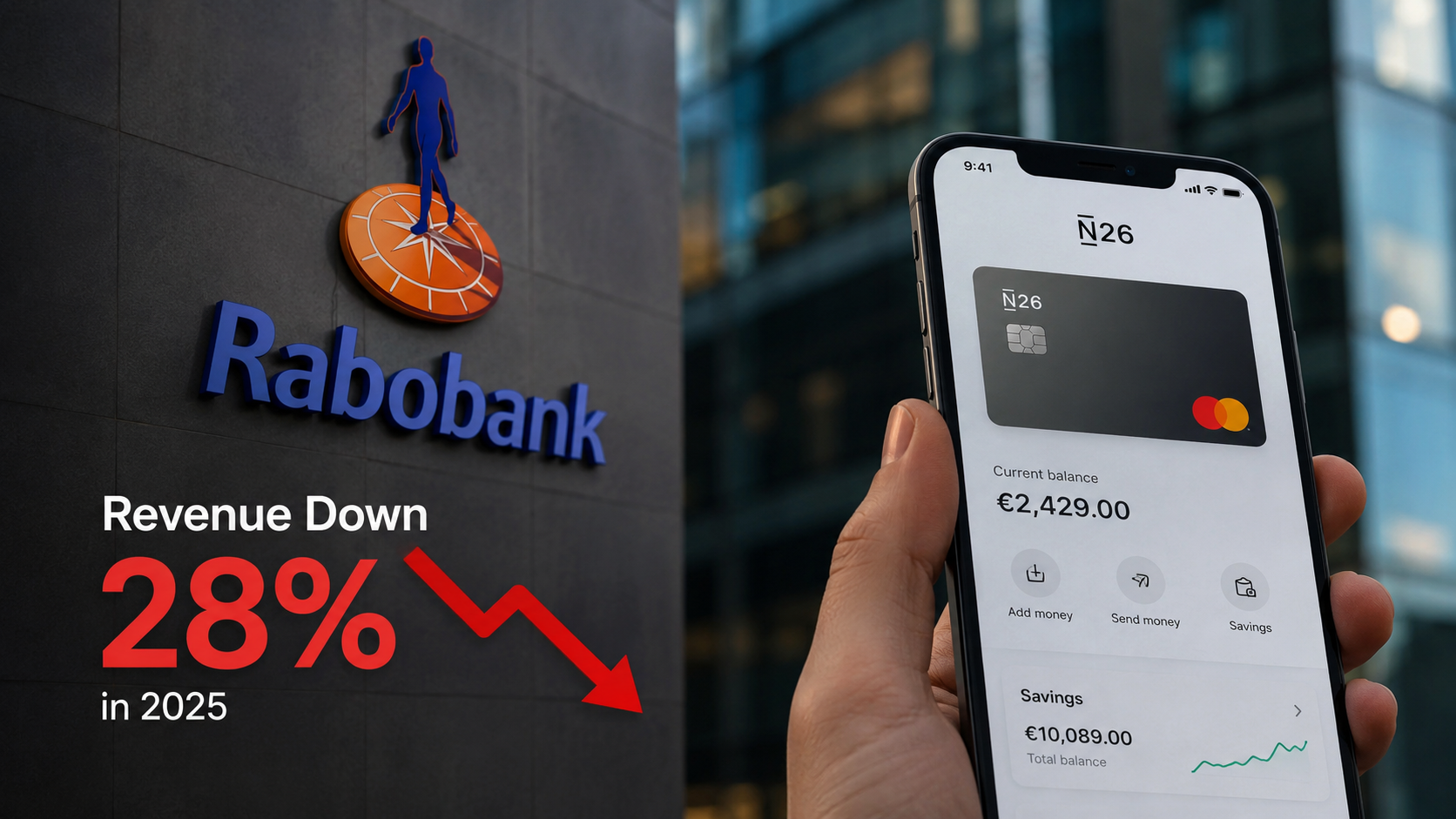
Rabobank Revenue Falls 28% as Customers Flock to Neobanks Offering Better Rates and Faster Service
Traditional lender Rabobank saw its revenue drop by more than a quarter in 2025 as retail and small-business customers migrated en masse to digital-first neobanks like N26, citing higher interest rates, faster apps, and superior customer support.