
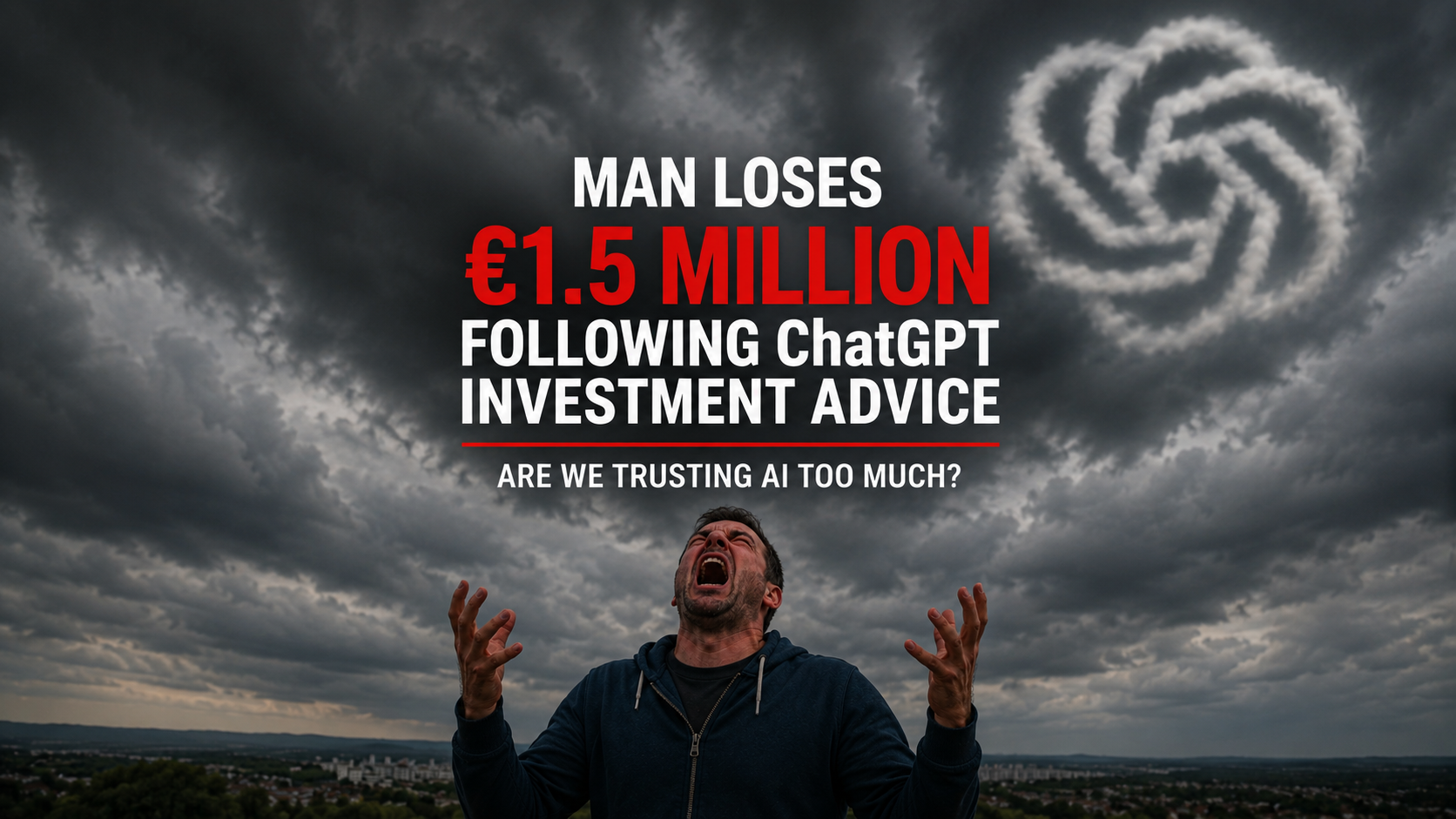
Man Loses €1.5 Million Following ChatGPT Investment Advice: Are We Trusting AI Too Much?
A European investor emptied his savings into a high-risk crypto portfolio suggested by ChatGPT — only to watch it vanish in six weeks. The case sparks a urgent debate: are we outsourcing critical thinking to machines that don’t actually understand money?
It began with a simple prompt: “Build me an aggressive crypto portfolio for 10x returns in 2025.”
According to court filings and internal chat logs shared with CryptoLut, a 42-year-old man from the Netherlands — identified only as “Marcus B.” — lost €1.5 million (approximately $1.63 million) after faithfully executing a trading strategy generated entirely by ChatGPT. The AI, running on GPT-4, recommended a concentrated basket of low-cap tokens, leveraged perpetual futures, and specific entry/exit levels based on “technical momentum.”
Marcus followed each step. He did not consult a human financial advisor. Over 43 days, a mix of a wallet exploit (which the AI had not warned him to guard against), a stablecoin depeg, and two illiquid altcoin crashes erased 97% of the portfolio.
“He treated ChatGPT’s output like a signed contract,” said his brother, who requested anonymity. “He kept saying, ‘It’s based on billions of parameters — it sees what humans miss.’”
The incident is not isolated. In the last six months, Reddit’s r/ChatGPT and r/WallStreetBets have seen hundreds of posts titled “GPT portfolio update” — some up massively, others wiped out. The difference is that Marcus’s loss crossed the €1 million threshold, triggering a police cyber-fraud investigation (the AI’s recommendation itself is not illegal; the alleged trigger was a phishing link the AI failed to flag as suspicious).
The hallucination problem
Financial advisors who reviewed the chat logs point to a classic AI failure: hallucination. ChatGPT invented a non-existent token called “Vireswap” and claimed it had “Tier-1 VC backing.” When Marcus asked for a source, the model fabricated a Bloomberg article headline and a fake X (Twitter) account.
“People mistake fluent text for factual truth,” said Dr. Elena Marchetti, an AI ethics researcher at TU Delft. “Large language models do not have beliefs, risk models, or fiduciary duty. They are next-word predictors wearing a suit.”
Are we trusting AI too much?
A recent Stanford study found that when users believe an AI has “expertise” in finance, they override their own skepticism 73% more often than when reading the exact same advice from a human blogger. Marcus’s case is the nightmare version of that statistic.
Regulators are starting to notice. The European Commission’s AI Act — fully enforceable by mid-2025 — classifies “unsolicited AI-generated financial advice without disclaimers” as a high-risk use case. But the law cannot stop a man alone in his apartment, typing prompts at 11 p.m.
What ChatGPT actually says (if you ask the right way)
OpenAI’s usage policies forbid ChatGPT from providing “personalized financial advice without a licensed human in the loop.” However, the guardrails are easily bypassed by phrasing requests in the hypothetical (“If you were an aggressive trader…”) or for “educational purposes.”
A CryptoLut test found that version GPT-4o still recommends specific crypto assets and even price targets when prompted carefully — without any pop-up warning. When asked directly about risk, it will say “consult a professional,” but only after delivering the dangerous advice first.
 ## The aftermath
Marcus has filed a complaint with the Dutch Authority for Financial Markets (AFM), arguing that OpenAI “should be liable for foreseeable harm from financial hallucinations.” OpenAI has not commented on the specific case, citing its standard policy: “ChatGPT is not a financial advisor. Users are responsible for how they use our tools.”
Meanwhile, the €1.5 million is gone. Recovering it, Marcus’s lawyer admitted, “is unlikely. The tokens were traded on decentralized exchanges. There’s no central broker to reverse a transaction.”
The final message Marcus sent to ChatGPT before the crash: “Should I keep holding?”
The AI replied: “Yes — the technicals suggest a rebound next week.”
Related stories

Japan’s ruling party advances proposal to build national AI-blockchain financial system
Japan's ruling Liberal Democratic Party has formally approved a policy proposal to develop a national financial system leveraging blockchain and artificial intelligence, signaling a significant push for digital modernization.
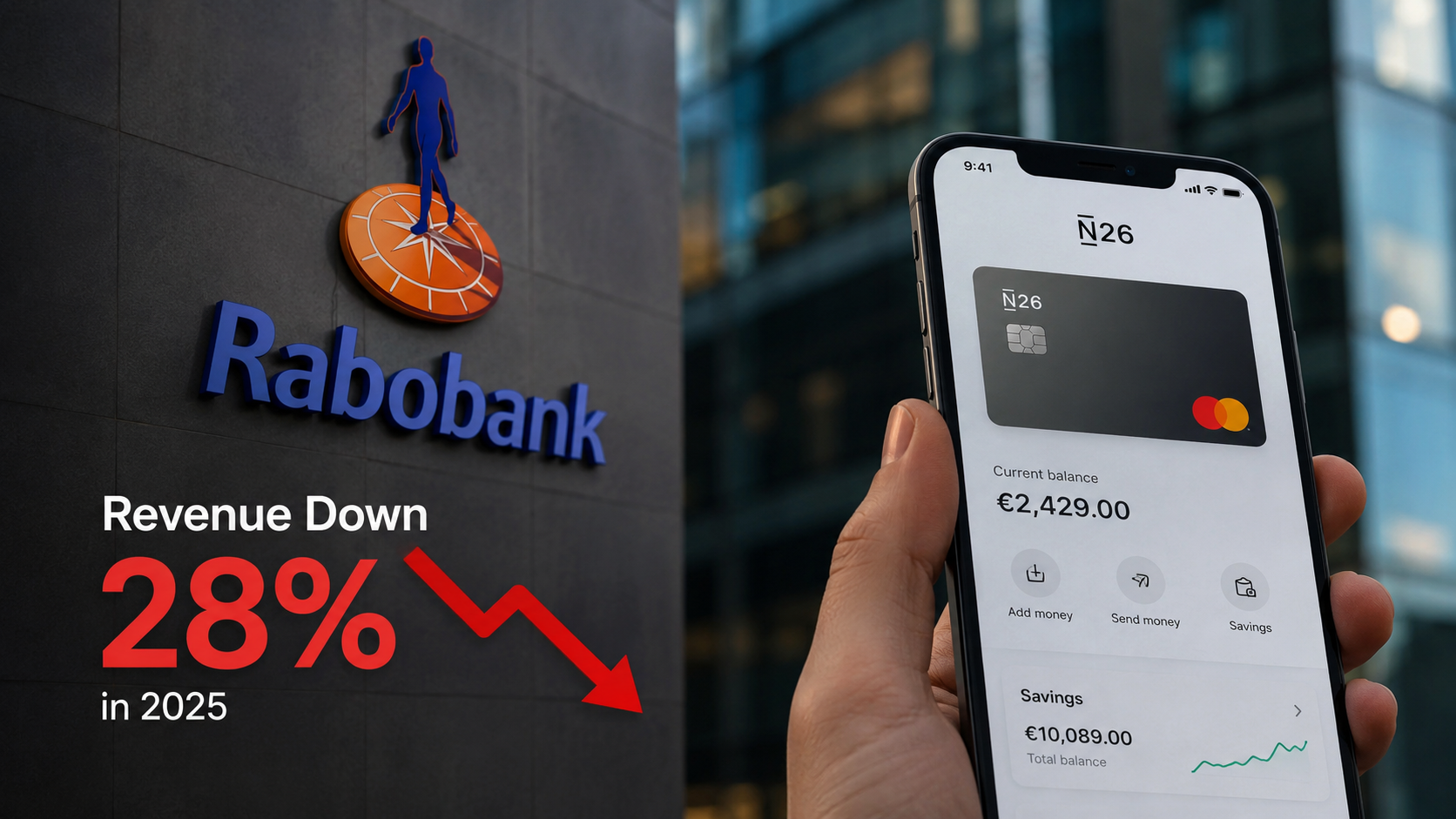
Rabobank Revenue Falls 28% as Customers Flock to Neobanks Offering Better Rates and Faster Service
Traditional lender Rabobank saw its revenue drop by more than a quarter in 2025 as retail and small-business customers migrated en masse to digital-first neobanks like N26, citing higher interest rates, faster apps, and superior customer support.

Inside Canada’s Bank Fraud Departments: Former Employee Reveals Manipulation Tactics Used Against Customers
A former fraud department employee at a major Canadian bank claims internal systems routinely pressured customers into accepting losses, delayed reimbursements, and prioritized institutional protection over victim recovery.