
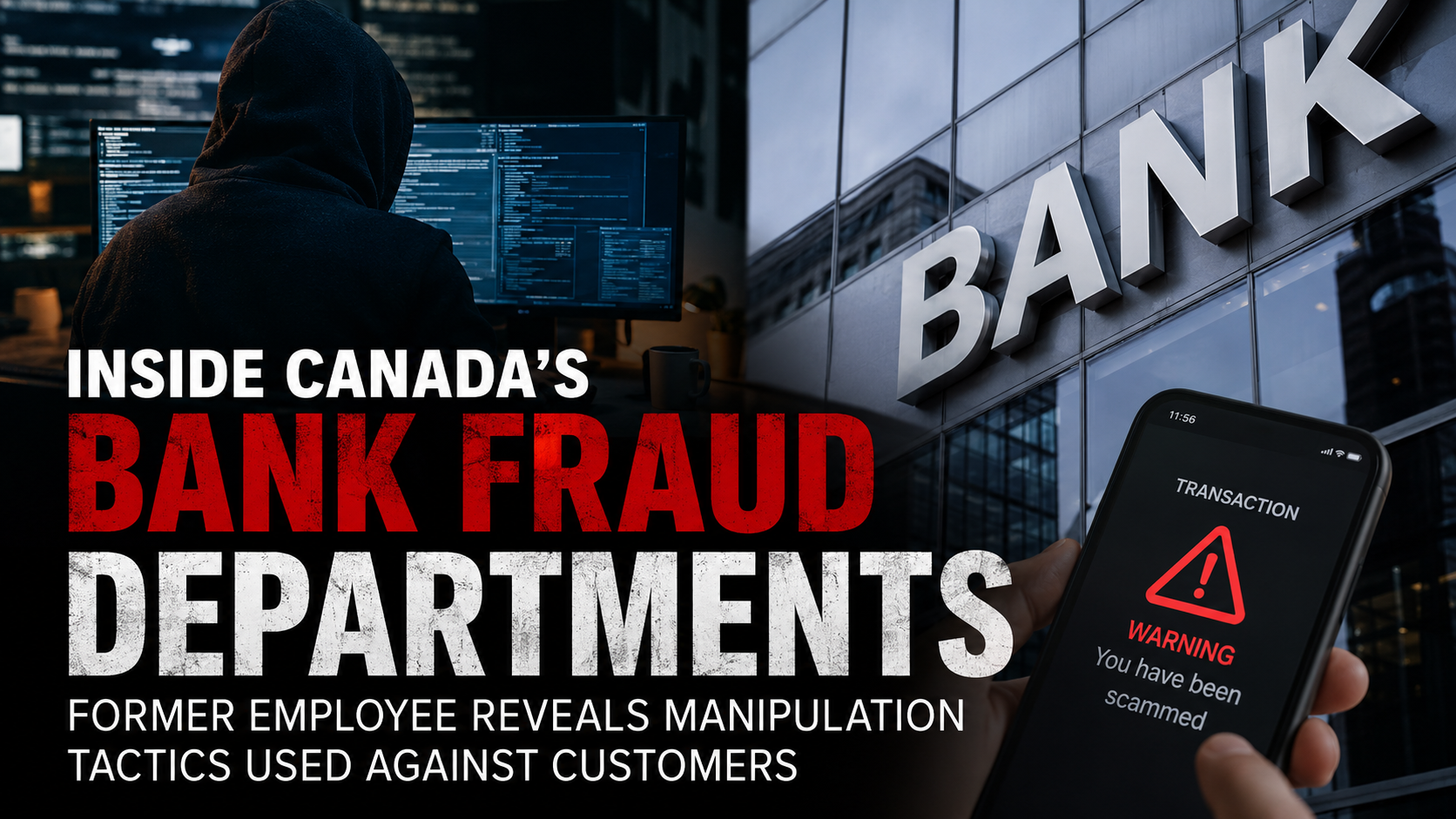
Inside Canada’s Bank Fraud Departments: Former Employee Reveals Manipulation Tactics Used Against Customers
A former fraud department employee at a major Canadian bank claims internal systems routinely pressured customers into accepting losses, delayed reimbursements, and prioritized institutional protection over victim recovery.
The Call That Changed Everything
On a cold Thursday evening in Toronto, a retired schoolteacher received a frantic phone call from someone claiming to represent her bank’s fraud department. The caller warned her that suspicious activity had been detected on her account and instructed her to move funds immediately to a “secure holding account.”
Within two hours, her life savings had disappeared.
When she contacted her bank the next morning, she expected urgency, reassurance, and immediate intervention. Instead, according to documents reviewed by this publication and testimony from a former fraud department employee, she entered a system designed less to recover stolen money and more to reduce the bank’s financial exposure.
“It shocked me how much of the process was about liability management rather than helping customers,” said the former employee, who worked inside the fraud operations division of one of Canada’s largest banks and requested anonymity due to non-disclosure agreements and fear of retaliation.
According to the whistleblower, frontline fraud teams were trained not only to investigate suspicious activity, but also to identify language and procedural strategies that could minimize reimbursement obligations.
“The public believes fraud departments exist primarily to protect them,” the former employee said. “Internally, the pressure was often about protecting the institution first.”
Canada’s Fraud Epidemic
Financial fraud has exploded across Canada in recent years. From phishing scams and fake investment schemes to cryptocurrency fraud and SIM-swapping attacks, organized criminal networks have become increasingly sophisticated.
The Canadian Anti-Fraud Centre reported losses in the hundreds of millions annually, though investigators believe the real number is significantly higher because many victims never report incidents out of embarrassment or because they believe recovery is impossible.
Banks frequently advertise advanced fraud detection systems powered by artificial intelligence and behavioral monitoring. Television commercials portray institutions as vigilant guardians standing between consumers and cybercriminals.
But insiders say the reality behind the scenes is considerably more complex.
“Customers think there’s a giant emergency response system waiting to save them,” the former employee explained. “In reality, there are scripts, quotas, internal metrics, and legal thresholds.”
The “Authorized Transaction” Loophole
At the center of many disputes is one crucial distinction: whether a transaction is considered “unauthorized.”
If hackers directly compromise an account, banks are often obligated to reimburse losses under consumer protection frameworks and internal policies.
However, if a customer is manipulated into voluntarily sending money — even under false pretenses — banks may classify the event as an “authorized transaction.”
That classification changes everything.
“The fastest way to close a case was to establish that the customer technically authorized the transfer,” the former employee said. “Once that happened, reimbursement odds dropped dramatically.”
According to the whistleblower, investigators were instructed to focus heavily on customer actions during interviews:
- Did the customer read the text message warning?
- Did they verbally confirm the transaction?
- Did they provide a one-time password?
- Did they ignore fraud alerts?
- Did they log into online banking themselves?
Even when victims were deceived by sophisticated impersonation scams, internal teams often viewed those details as opportunities to deny reimbursement.
“There was this mindset that if the customer clicked anything themselves, responsibility could be shifted back onto them.”
Psychological Pressure During Investigations
Former employees describe customer interviews as highly structured conversations designed to lock victims into statements that could later be used against reimbursement claims.
“People are emotional, embarrassed, terrified,” the source said. “Some investigators were trained to ask repetitive questions in slightly different ways to create inconsistencies.”
Those inconsistencies could later appear in internal case notes.
In several disputed cases reviewed by this publication, denial letters cited customer “contradictions” or “failure to exercise reasonable caution.”
One victim said investigators repeatedly asked whether she had “knowingly interacted” with the scammer, despite her insistence that she believed she was speaking with legitimate bank staff.
“The wording matters enormously,” the former employee explained. “Once notes indicate the customer knowingly participated in the transfer process, the bank’s position becomes much stronger.”
Consumer advocates argue the distinction is increasingly outdated in an era where criminals use spoofed phone numbers, cloned websites, AI-generated voices, and stolen personal information to convincingly impersonate trusted institutions.
Internal Performance Metrics
Perhaps most troubling are allegations surrounding internal performance targets.
The former employee claims some departments monitored reimbursement ratios and fraud loss exposure at the team level.
“There was constant pressure to keep losses down,” they said. “Managers tracked recovery numbers, write-offs, escalation rates, and reimbursement percentages.”
While the source emphasized there were no explicit instructions to deny legitimate claims, employees allegedly understood the broader institutional objective.
“You knew which investigators management viewed favorably,” the source explained. “The people who escalated fewer reimbursements tended to advance faster.”
Several former banking employees contacted independently by this publication described similar cultures within Canadian financial institutions, though all requested anonymity.
One former investigator said internal discussions often framed customers as operational risks rather than victims.
“The assumption was frequently that the client made a mistake and the bank shouldn’t have to absorb the cost.”
Delays as Strategy
Time, according to insiders, can become another institutional advantage.
Fraud victims often report waiting weeks or months for final determinations. During that period, they may struggle to pay rent, cover mortgage obligations, or access frozen funds.
The whistleblower alleges delays were sometimes strategically useful.
“The longer a case stays open, the less likely some customers are to continue escalating,” they claimed.
Complex investigations involving multiple departments, external institutions, law enforcement coordination, and international transfers can legitimately require time. However, critics argue opaque communication processes leave customers exhausted and confused.
Victims interviewed for this story described being transferred repeatedly between departments, asked to resubmit documentation multiple times, and receiving inconsistent explanations about case status.
“It felt designed to wear me down,” one Vancouver-based victim said.
Cryptocurrency Complicates Everything
The rise of cryptocurrency-related fraud has intensified tensions between banks and customers.
Scammers increasingly convince victims to transfer money onto crypto exchanges before funds disappear into anonymous wallets.
Banks often classify such transactions as high-risk customer decisions rather than traditional fraud.
Internally, according to the former employee, crypto cases were viewed as particularly difficult because recovery odds were low and reputational exposure was high.
“There was concern that reimbursing too many crypto scam cases would create precedent,” the source said.
Some institutions reportedly flagged customers engaging with cryptocurrency platforms for enhanced monitoring or account restrictions after fraud claims emerged.
Meanwhile, victims argue banks simultaneously profit from transaction fees while distancing themselves from liability when scams occur.
The Human Toll
Behind every fraud file is a personal catastrophe.
Victims described panic attacks, depression, insomnia, and profound feelings of shame after losing savings.
One small business owner said he considered bankruptcy after scammers emptied operating accounts during tax season.
Another victim said she stopped answering phone calls entirely after repeatedly being contacted by fraud investigators and debt collectors.
Experts warn that scam victims often experience trauma similar to survivors of other forms of financial abuse.
“Fraud isn’t merely financial,” said one Canadian consumer rights advocate. “It destroys confidence, relationships, and mental well-being.”
Former employees say frontline fraud staff themselves frequently experience burnout.
“You spend all day talking to devastated people while simultaneously being pressured to follow institutional procedures,” the whistleblower said. “A lot of employees struggle emotionally.”
Regulatory Questions
Consumer advocates argue Canadian banking regulations have failed to keep pace with modern fraud tactics.
Unlike some jurisdictions that are moving toward mandatory reimbursement frameworks for authorized push-payment scams, Canada’s protections remain fragmented across institutions and circumstances.
Critics say banks possess vastly superior fraud intelligence, transaction monitoring capabilities, and cybersecurity resources compared to ordinary consumers.
“Individual customers cannot realistically defend themselves against industrialized criminal organizations using social engineering and AI,” one legal expert said.
Calls for reform are growing louder.
Advocates want:
- Mandatory transparency around fraud denial rates
- Independent appeals mechanisms
- Faster provisional reimbursements
- Standardized victim protections across banks
- Greater accountability for social engineering scams
- Enhanced oversight of fraud investigation practices
Banks maintain that customers also play a critical role in security and regularly issue warnings about scams.
Industry representatives argue institutions already invest billions into cybersecurity infrastructure and fraud prevention systems.
What Customers Should Watch For
Former fraud employees say customers should document every interaction during fraud investigations.
That includes:
- Recording dates and times of calls
- Saving emails and screenshots
- Requesting written explanations for denials
- Escalating complaints quickly
- Filing reports with regulators and law enforcement
- Asking for copies of internal fraud findings where possible
Experts also advise customers to remain cautious of urgency-based requests, even when callers appear legitimate.
Banks rarely ask customers to transfer money into “safe accounts,” reveal one-time passwords, or move funds due to ongoing investigations.
“Fraudsters succeed because they create panic,” the former employee said. “Once fear takes over, rational decision-making collapses.”
The Silence Inside the System
The former employee says many workers inside fraud departments genuinely want to help customers, but institutional incentives create conflicting priorities.
“There are good people in those departments,” they said. “But the system itself is built around managing financial exposure.”
The whistleblower ultimately left the industry after becoming increasingly uncomfortable with how vulnerable customers were treated.
“You start realizing people trust banks with their entire lives,” they said. “And when something goes wrong, they assume the institution will fight for them. That’s not always how it works.”
As scams become more technologically sophisticated and financial crime accelerates globally, pressure is mounting on Canadian banks and regulators to redefine where institutional responsibility ends — and consumer protection begins.
For thousands of fraud victims across the country, that debate is no longer theoretical. It is deeply personal.
Related stories
Man Loses €1.5 Million Following ChatGPT Investment Advice: Are We Trusting AI Too Much?
A European investor emptied his savings into a high-risk crypto portfolio suggested by ChatGPT — only to watch it vanish in six weeks. The case sparks a urgent debate: are we outsourcing critical thinking to machines that don’t actually understand money?

Japan’s ruling party advances proposal to build national AI-blockchain financial system
Japan's ruling Liberal Democratic Party has formally approved a policy proposal to develop a national financial system leveraging blockchain and artificial intelligence, signaling a significant push for digital modernization.
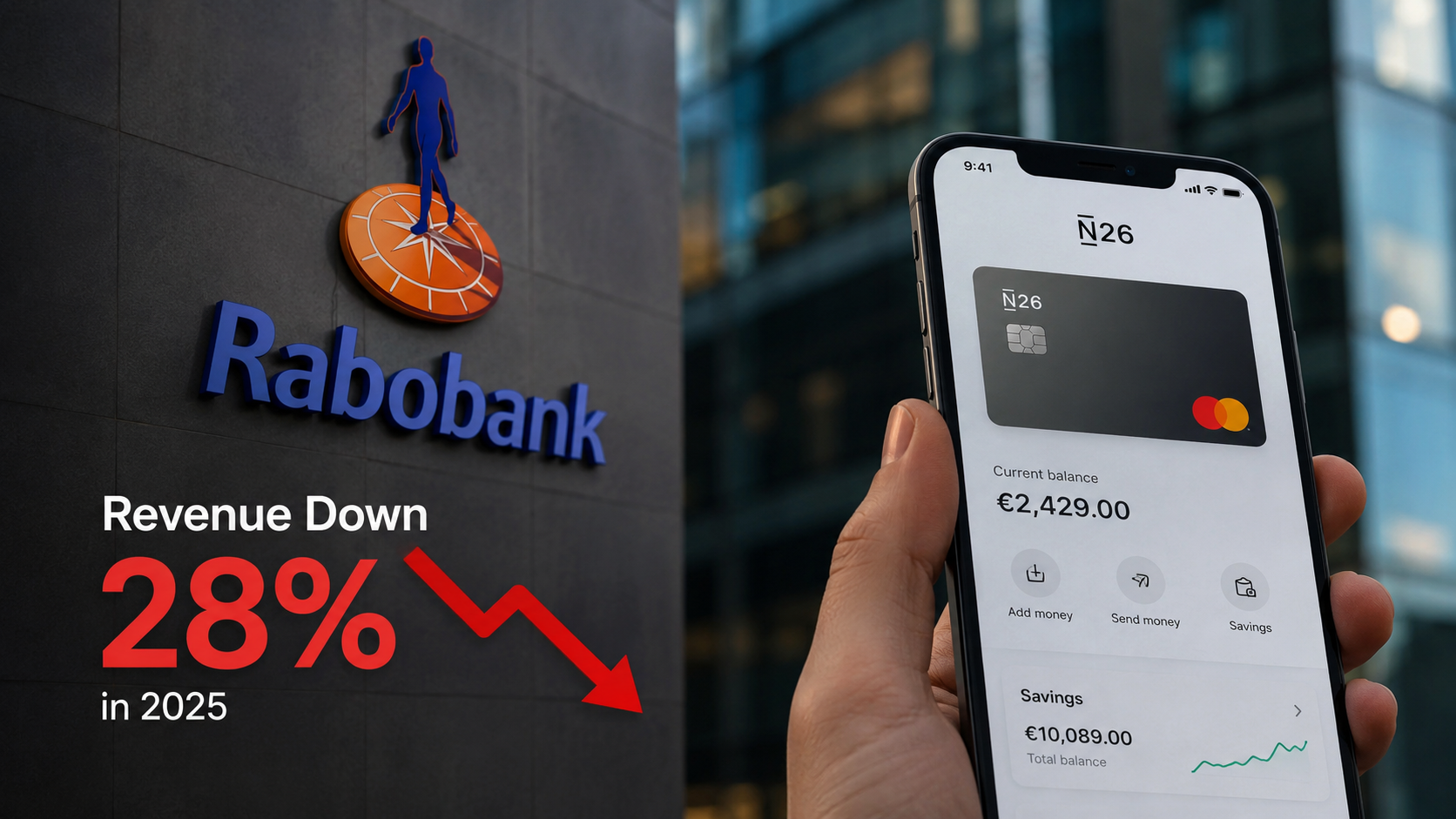
Rabobank Revenue Falls 28% as Customers Flock to Neobanks Offering Better Rates and Faster Service
Traditional lender Rabobank saw its revenue drop by more than a quarter in 2025 as retail and small-business customers migrated en masse to digital-first neobanks like N26, citing higher interest rates, faster apps, and superior customer support.